
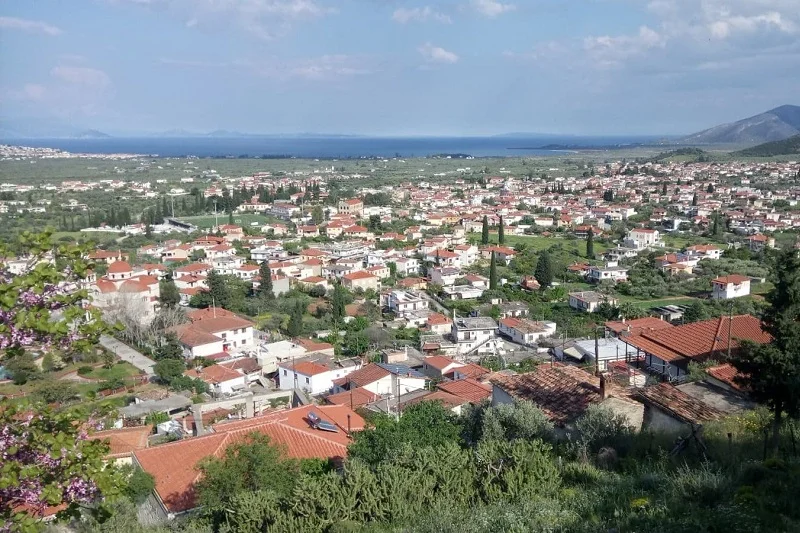
One of the most famous resorts of the Peloponnese, with great growth due to the short distance from Athens and the big cities of the Peloponnese. Indicative: 165km from Athens and 49km from Tripoli.
Astros, the historic town, is located in the southeastern part of the prefecture of Arcadia, in the center of the fertile plain of Thyrea, 40 km southeast of the capital of the prefecture, Tripoli, and is the seat of the Municipality of North Kynouria, with a population of 2,285 inhabitants ( with the 2011 census). Astros is the most important center of North Kynouria and is a base for excursions to mountainous, mainly, villages, located perched on the Parnon mountain range.
It is located in a fertile plain, which had an important strategic position in historical times, being an apple of contention, in antiquity, between the Argians and the Spartans.
It is surrounded by olive groves and is the commercial and administrative center of the wider area, since here Banks and Public Services operate, while there is also a Health Center.
Here is also the seat of the Management Body of Mount Parnon and Moustos wetland, in the building where the Environmental Information Center is also housed.
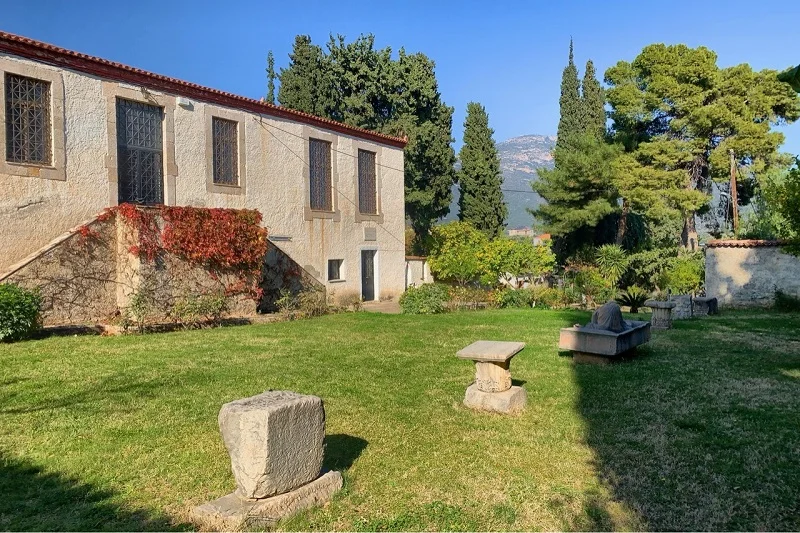
The Karytsioti School was founded by Dimitrios Karytsiotis, a great benefactor of the region, an expatriate in Trieste, who excelled in trade. The School was a complete dormitory – boarding school and operated since 1798 with students from almost all of the Peloponnese. The building of the Karytsiotis School now houses the Archaeological Museum of Astros, with finds from the wider area of Kynouria and especially from the area of Loukous – Villa of Herod of Attica.
Northwest of Astros is the archaeological site of the villa of Herod Atticus, one of the most important monuments of Roman times in Greece, extremely rich in impressive sculptures and mosaics (See p. 205). Very close to the villa is the Holy Monastery of Loukous, dedicated to the Transfiguration of the Savior (See p. 180). In the wider area of Astros, important cities flourished in antiquity, Eva, Thyrea, Anthini and Niriis. One of the most important monuments near the archeological site of the villa of Herodes Atticus is the Aqueduct, located a little further south. The arch is preserved, which bridges the stream between the source and the facilities of the villa. The rich waters of the springs of “Mana tou Nero” that supplied water to the villa in antiquity, are still used today for the water supply of the area of Astros. At the Archaeological Museum of Astros, the visitor has the opportunity to admire the archaeological treasures of the area and to get to know to a certain extent its long creative course in antiquity. The museum is housed in the building of the Karytsiotis School, where in April 1823 the Second National Assembly of the Greeks was convened.
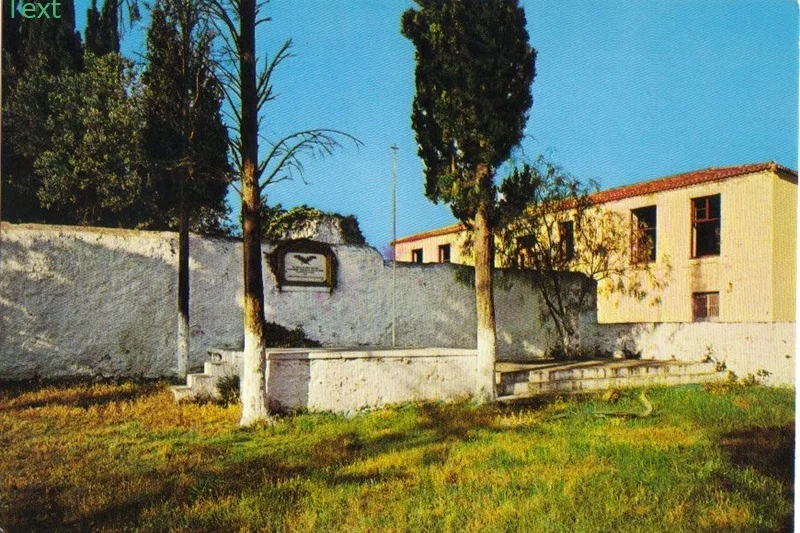
2nd National Assembly of Astros: In Astros, in 1823 AD, the 2nd National Assembly of the Greeks was held, with the main purpose of the revision and modernization of the Statutory Charter, that is, of the Constitution, for the just liberated parts of our homeland, the which had been passed in 1822 AD, during the First National Assembly in Epidaurus, for which it was named “Law of Epidaurus”.
The Assembly began its work on March 29 with Petrobei Mavromichalis as President. The meetings took place in the countryside, “inside an orchard”, according to Kolokotronis and “inside the Museum of Karytsiotos”, where the declaration of the National Assembly was drafted. The most important task of the National Assembly was the Review of the “Provisional Government of Greece”. The country now has a final Charter, which regulates all matters related to the establishment and operation of the state, institutions and the army.
The revised Constitution, extremely progressive and pioneering for its time, contained liberal and democratic provisions, which guaranteed the individual rights of the citizen: public education was institutionalized, issues of religious freedom of non-Orthodox living in Greece were established, the principle of The Penal Code was drafted based on Byzantine Law, to protect the citizen from the impunity of the authorities. He illuminated the universe with lessons of freedom and democracy, declaring that: “no one is sold or bought in the Greek territory and the bought man, if he steps on the Greek territory, becomes free and the buyer loses his silver”.
The Assembly also discussed the crucial issue of the sale of national lands left behind by the Turkish rulers. The anger of the people, but also the immediate intervention of Kolokotronis prevented the sale, which would result in the appropriation of the lands by the Proestos and Kotzambasides, while the cultivators would continue to work as colleges.
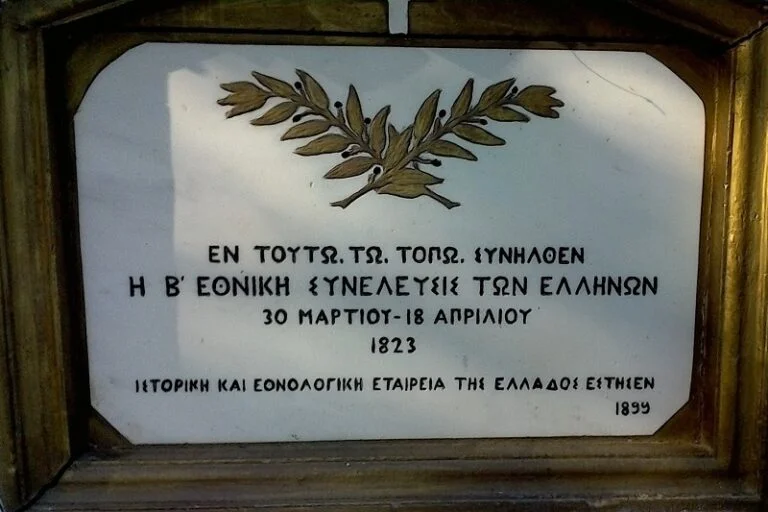
The Assembly, in the model of the Constitutions of the French Revolution of 1789 AD, also drafted the “Declaration of the NW of the Greek Assembly”, a Declaration of national independence and resurrection, conveying throughout the universe the just voice of enslaved people who revolted for his freedom, for his political and physical existence, for his inalienable human rights. In the area of the Second National Assembly in 1899 AD. A votive plaque was placed to remind visitors of the sanctity of the place.