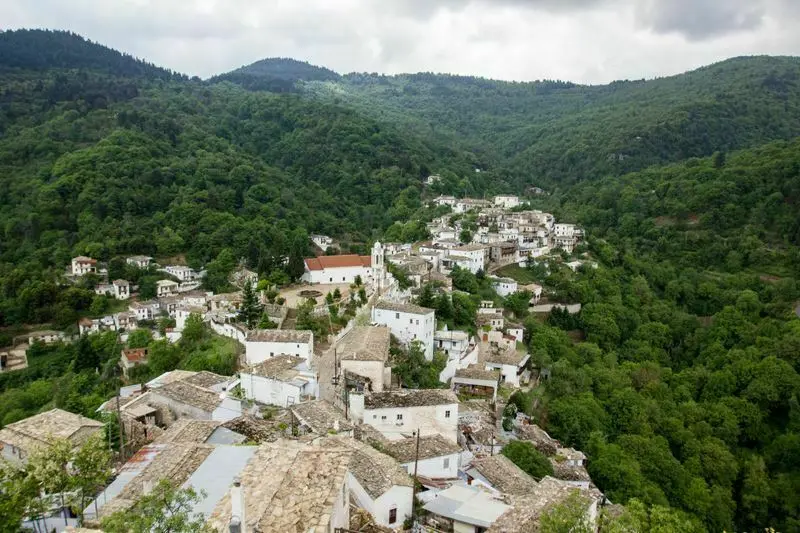
Kastanitsa is first mentioned in writing in 1293, but the settlement is thought to be nearly two centuries older, founded by Tsakones fleeing the rule of Slavic tribes that had invaded the Peloponnese.
According to Kastaniot tradition, the village was founded by two families called Pentalonas and Bezenikos.
Currently, the village contains around two hundred-fifty inhabitable houses, representing a significant shrinkage from Villehouson’s figure of four hundred.
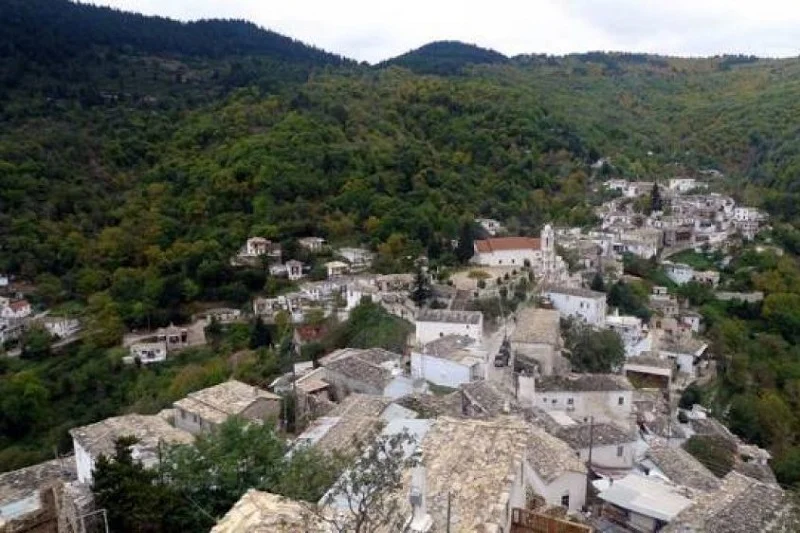
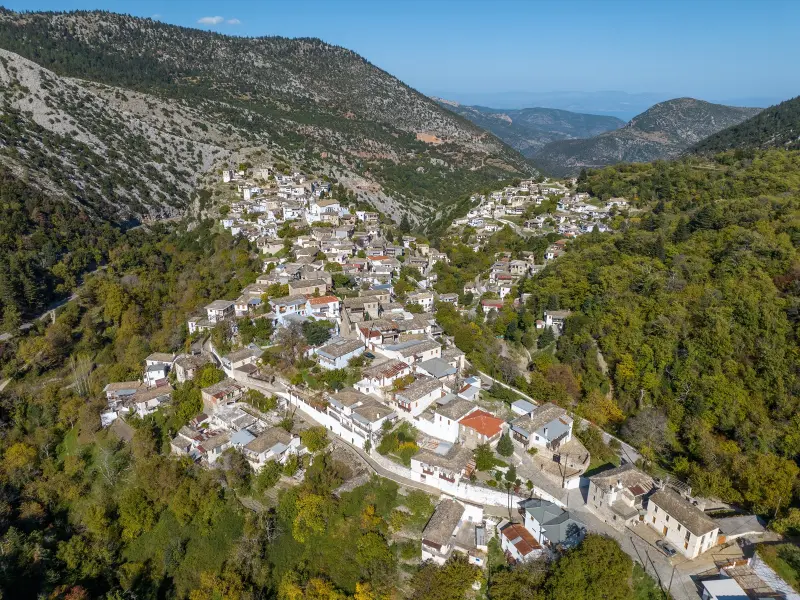
Most houses are built from local stone, and the village is classified as a heritage site by the Greek government, which places controls on external renovations.
Most roofs in Kastanitsa are made of slate, which, because of its low water absorption, is more resistant to frost damage during the winter snows.
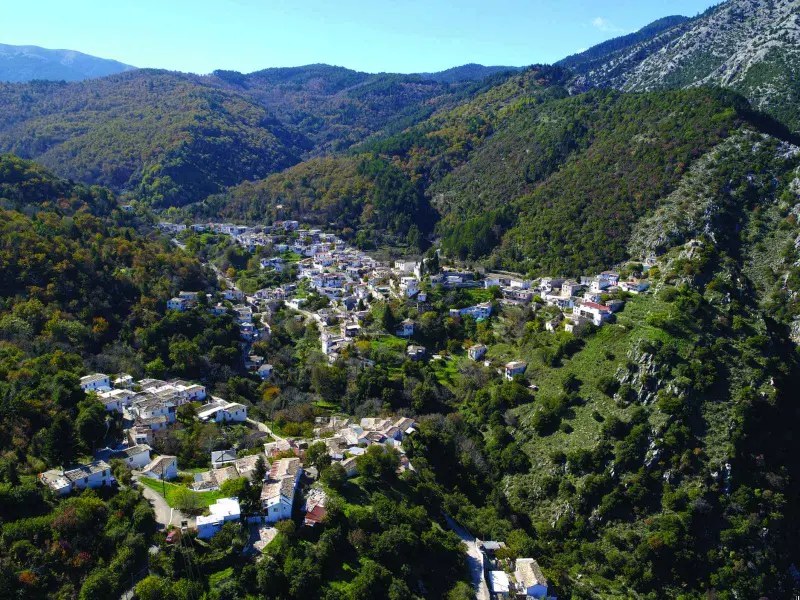
Chestnut forests still surround the village: The largest contains 4,500 acres (18 km2).
In the past, these produced up to four hundred tonnes of chestnuts annually.
(Historically, chestnuts were used to make dye for leather and other materials).
In addition, there are thirty lime kilns for the production of plaster. (Men in Tsakonian villages often made their living in winter as itinerant plasterers in other parts of the Peloponnese and as far north as Attica, departing their villages at the feast of Saint Demetrius and returning for Holy Week). Wintertime population loss has accelerated in the automobile age, and the village presently has only around fifty year-round inhabitants, with a large influx of residents and visitors in summertime.
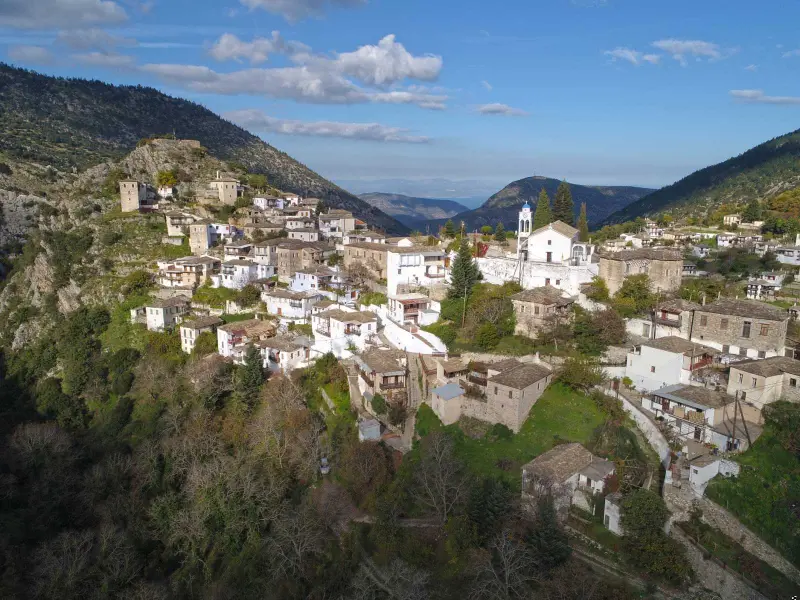
The village centre contains shops, cafes, taverns, a library, and the Church of the Transfiguration dating to 1780 and containing Russian woodwork donated by Catherine the Great. There are fifteen country chapels in the countryside outside the village and a church of Saint Pantaleon built on the ruins of the former monastery dedicated to Saint Nicholas, founded in 1628 and destroyed in 1826 by Ibrahim Pasha.
Important holidays in the village include the Feast of the Transfiguration (August 6) and the annual Chestnut Festival, held in October.